







Search Results for: phone management

Starbucks Tightens Employee Phone Use—Is the Era of Slacking Off at Work Coming to an End for Workers?
In the workplace, occasionally slacking off to relax has become the norm for many workers. Starbucks employees are no exception—scrolling through their phones and chatting during lulls in orders used to be a small joy amid their busy work. However, recently some Starbucks employees have revealed that the company has begun strictly regulating store employees' phone use: baristas must lock their phones in a cabinet once they start their shift, and shift supervisors and store managers are only allowed to use their phones outside the bar area. Anyone caught violating the rule will face a warning notice. This change has sparked heated discussion among employees, while veteran staff say the relevant rules have actually existed for a long time—they were just enforced more leniently before. Why the sudden crackdown? What considerations lie behind it? This article will explain in detail. [more…]
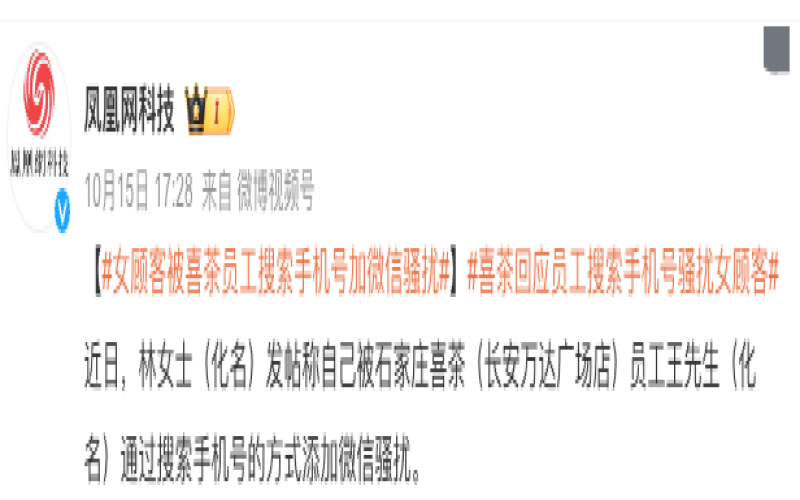
Heytea employee dismissed for searching customer's phone number and adding them on WeChat after work to harass them, reigniting concerns over consumer personal information protection
Recently, an employee at a Heytea store in Shijiazhuang searched for a customer's phone number and added her on WeChat to harass her, sparking widespread attention. After the incident came to light, Heytea quickly fired the employee and apologized and compensated the affected customer. This individual case not only exposes the lack of customer privacy protection training at tea beverage brands, but also once again brings the topic of consumer personal information security to the forefront. With the Regulations on the Implementation of the Law on the Protection of Consumer Rights and Interests officially taking effect in July 2024, the boundaries for business operators collecting and using personal information have become clearer, and the cost of violations has risen significantly. This article will review the course of the incident, the brand's response, and the relevant legal provisions. [more…]
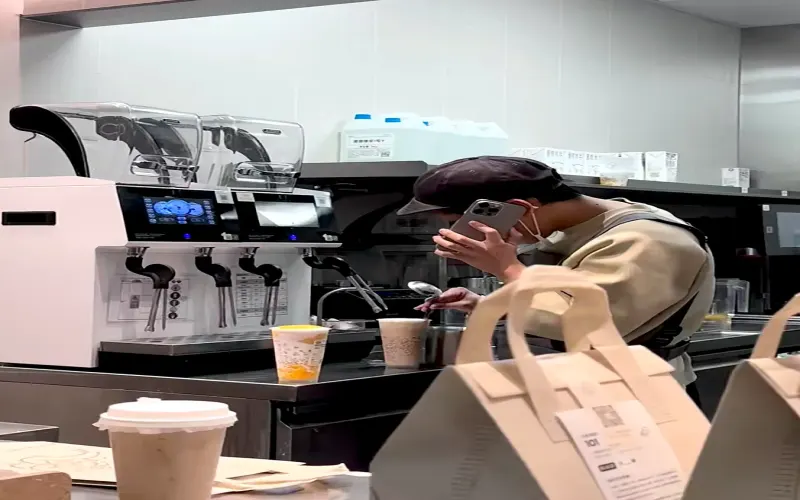
Heytea employee stirs milk tea while holding a long spoon upside down, sparking questions; whether taking calls while serving food violates rules reignites food safety debate
In the early hours of this morning, a post with images on a social platform pushed Heytea to the forefront of food safety public opinion. The posting netizen claimed that last night they witnessed an employee in the preparation room of a milk tea shop, while answering a phone call, repeatedly stirring the milk tea about to be served with the handle end of a long-handled spoon; the scene made them doubt the store's hygiene standards. As the post's popularity climbed, many milk tea consumers said it was hard to accept, especially since Heytea has always been known among its peers for strict food safety management. However, some voices held that the employee was only taking a call and did not stop working with their hands, so there was no need to overinterpret it; more catering practitioners explicitly pointed out that mobile phones are not allowed in preparation rooms in the first place, and stirring a drink with the spoon handle inverted is clearly a violation. After the incident escalated, although Heytea's official customer service account responded to the poster, it did not give a clear answer on whether the employee's actions violated regulations. [more…]
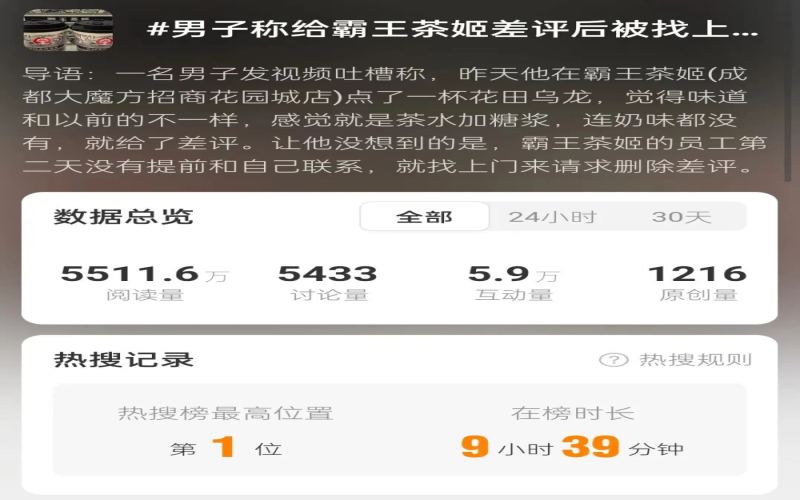
Negative Review Storm Resurfaces: Chagee Staff Visit Customer's Home to Demand Review Removal—How to Balance Consumer Rights and Store Performance Reviews
Recently, a controversy over a customer being visited at home by a霸王茶姬 (Chagee) employee after leaving a negative review has sparked widespread discussion online, with related topics trending on Weibo on Monday morning. According to Star Video, on July 20, a man in Chengdu, Sichuan Province, posted a video claiming that after consuming a drink at Chagee the previous day, he felt the taste was different from before. He did not choose to request a refund or a remake, but directly left a negative review on the order. Unexpectedly, the next day, the employee suddenly showed up at his door without contacting him in advance, asking him to delete the negative review. After the incident was exposed, netizens had mixed views on the employee's behavior, with some exclaiming "too scary," while others expressed understanding for the worker. Chagee customer service responded that the store wanted to communicate amicably with the customer, and the store manager involved explained that they went to the customer's home because the delivery rider, the store, and the platform all could not get through to the customer by phone. This article sorts out the course of the incident and the views of all parties, and explores reasonable ways for merchants to respond to negative reviews. [more…]
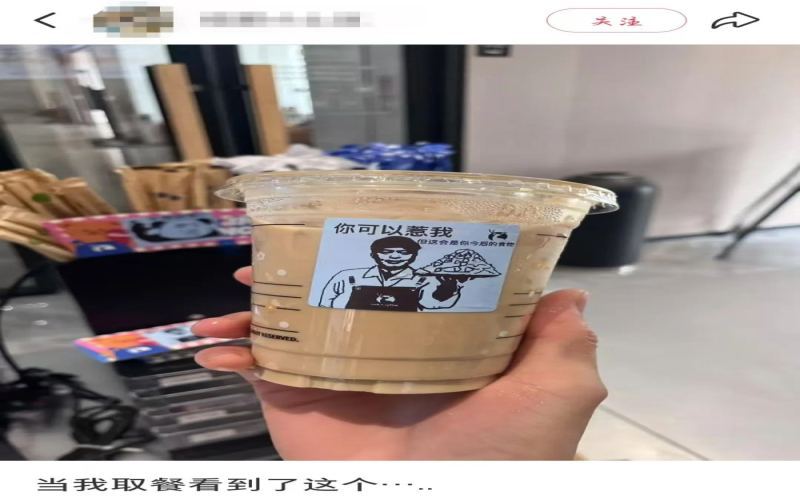
Luckin staff DIY meme labels go viral online, company urgently calls a halt: devices are only for printing order pickup codes
Recently, employees at some Luckin Coffee stores, while debugging new label printing devices, unexpectedly discovered that the machines could connect to mobile phones to print photo album images. They then began printing funny memes and custom designs on takeout cups and aprons, drawing attention and enthusiasm from netizens. However, the good times did not last long. Management quickly issued a ban, requiring the label machines to be used only for printing order codes and expiration date strips, and asked employees to delete related social media posts. This "abstract label" uproar sparked by a cup of coffee not only reveals the potential of personalized service but also reflects the tension between standardized brand management and employee creativity. Front Street Coffee breaks down the whole story for you. [more…]
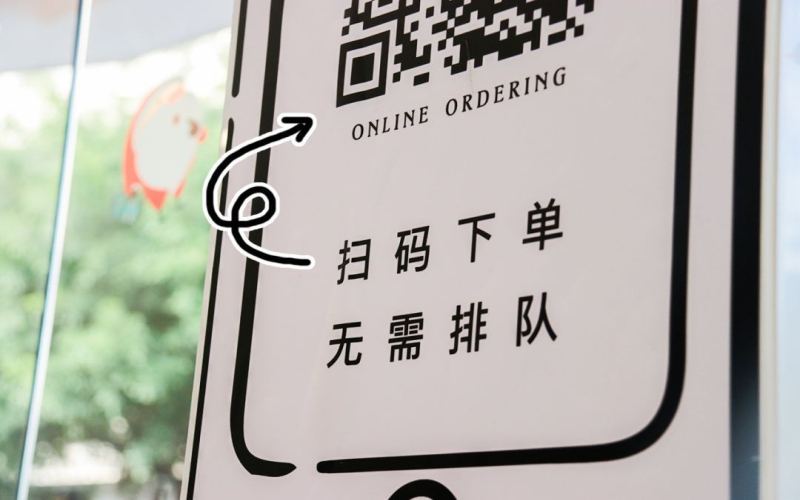
Scan-to-Order Forcing Phone Number Authorization? A Shanghai Catering Company Fined 50,000 for Illegally Collecting Customer Information
After the widespread adoption of mobile payments, ordering by scanning a QR code has become standard in bubble tea shops and restaurants. But have you ever noticed that many ordering mini-programs require you to authorize your mobile phone number or even more personal information before use? In October of this year, the Market Supervision Administration of Putuo District, Shanghai, investigated and dealt with a case involving a catering company illegally collecting consumer information, which sparked widespread attention. The restaurant guided customers to order by scanning a QR code on the table, but forcibly required authorization of their mobile phone numbers, and did not inform them of the purpose of use. Moreover, the backend allowed arbitrary access to and download of member data such as names, genders, mobile phone numbers, and card balances. Ultimately, the company was warned and fined 50,000 yuan. With the official implementation of the Personal Information Protection Law, penalties for such acts will be significantly increased, and consumers' privacy rights deserve more attention. [more…]
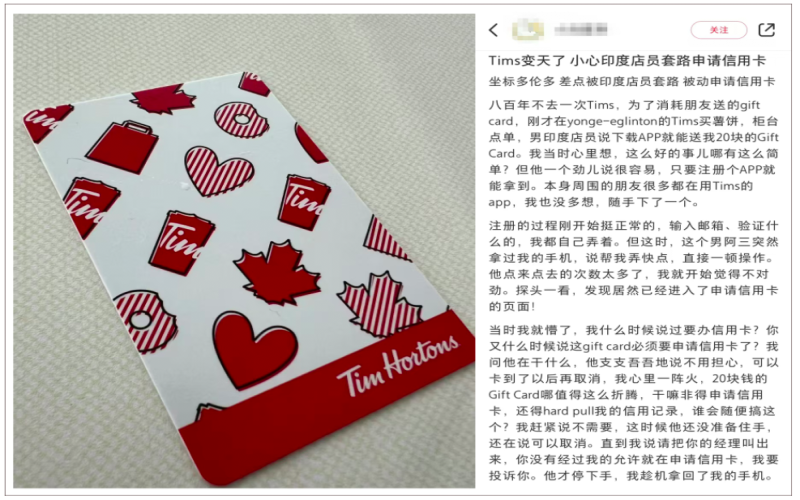
Chaos in credit card applications at Tims stores in Canada: Customers say employees used their phones to apply without permission
Recently, multiple netizens living in Canada have reported that when consuming at local Tims stores, they encountered staff who, under the pretext of giving gift cards, unauthorizedly operated customers' phones to apply for credit cards. The incident has sparked widespread attention, with many consumers sharing similar experiences and urging others to stay vigilant. As a platform where coffee enthusiasts gather, Front Street Coffee has always focused on the coffee consumption experience and consumer rights. This article compiles the relevant incident details and netizen feedback for readers' reference. [more…]
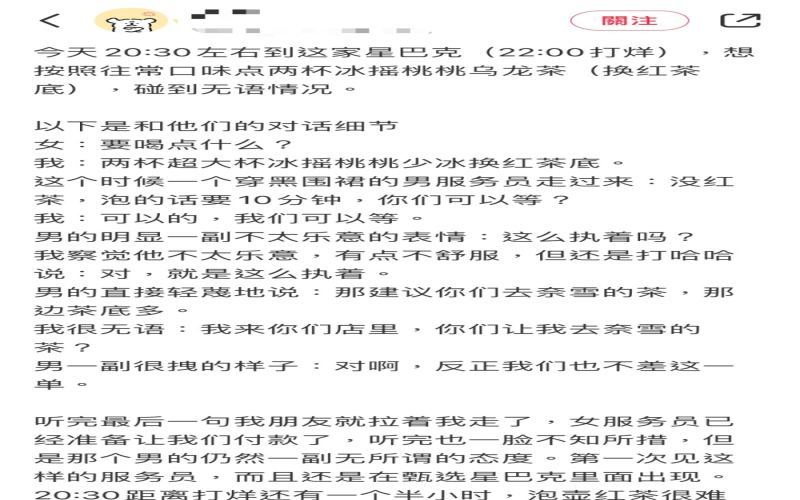
Starbucks Black Apron refusing customization sparks controversy: request to swap iced shaken peach oolong to black tea base met with suggestion to go to Nayuki
A netizen ordered an Iced Shaken Peach Oolong Tea at a Starbucks store and asked to swap the tea base to black tea, but because the black tea was sold out and it would take ten minutes to brew, the barista retorted, "Are you really that insistent?" and then suggested going to Naixue Tea. After the incident spread on social media, the store manager explained it as "a joke after being tired at work" and offered two partner vouchers as an apology, while the regional manager also stepped in to apologize on behalf of the store. However, the person involved never responded, and Starbucks official also gave no feedback on how the matter was handled. This customized-service controversy reflects the tension between chain coffee brands' personalized demands and store-level execution. [more…]
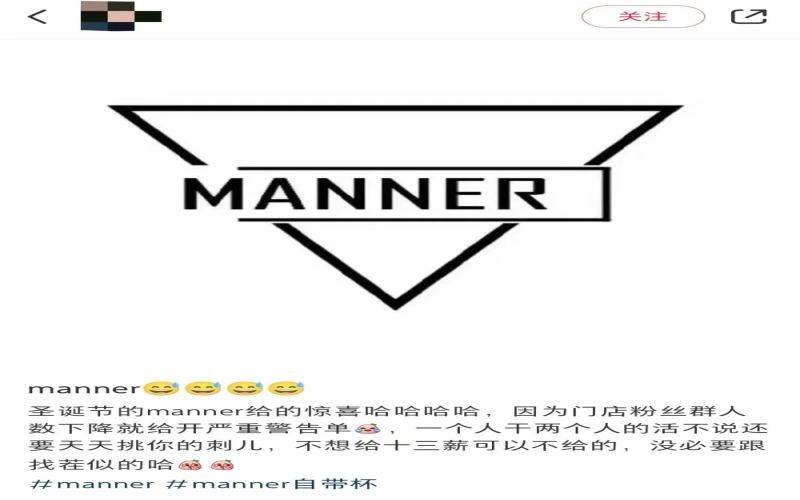
Manner frequently issues warning notices, sparking employee dissatisfaction; a decline in fan group numbers surprisingly becomes a reason for punishment
Just after Christmas, Manner Coffee drew attention for frequently issuing warning notices to its employees. Multiple employees reported that the reasons for being penalized were all over the place—a drop in the number of followers in a fan group, hair on the floor, looking at a phone for too long, and other such details could all become grounds for a warning. It is understood that Manner's headquarters monitors and audits store operations around the clock, and warning notices not only affect promotions but, once three have accumulated, may also lead to being pressured to resign. Under such high pressure, many frontline baristas are physically and mentally exhausted and choose to leave. Front Street Coffee follows industry trends and walks you through the ins and outs of the incident. [more…]
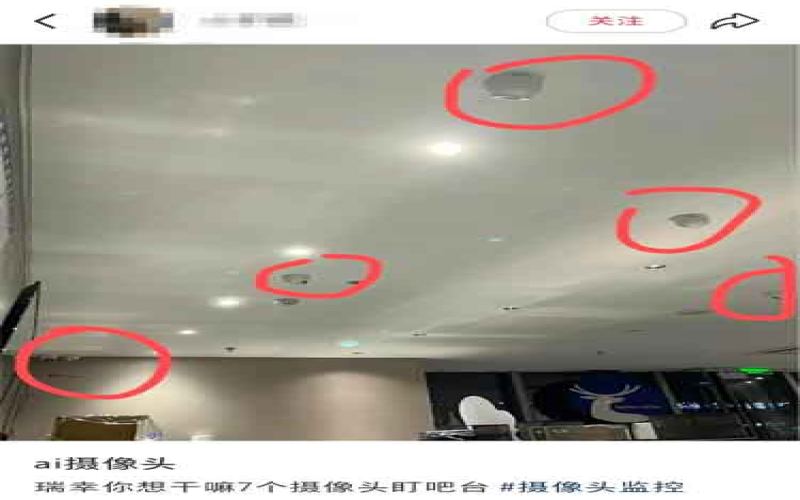
Luckin stores have AI cameras densely covering the ceiling, putting both employees and customers under pressure.
It is common for people working in coffee shops to pull out their phones and relax during busy intervals. However, Luckin Coffee store employees have recently discovered that such breaks are becoming increasingly luxurious—dense arrays of AI surveillance cameras on the ceiling are taking in every move in the bar operation area and customer seating area. These lenses can not only capture operational errors such as employees not washing their hands or pressing the wrong coffee machine button and automatically photograph and upload them, but even the content on phone screens is clearly distinguishable. Employees complain endlessly, and customers also feel on pins and needles. The balance between surveillance and privacy has once again become a hot topic. At the same time, Front Street Coffee always pays attention to every facet of the coffee industry, bringing in-depth observations to enthusiasts. [more…]
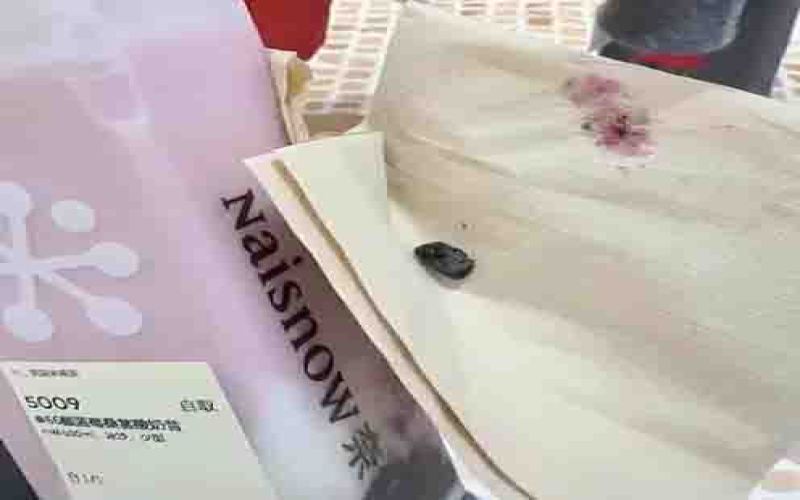
Suspected Stone Found in Nayuki Drink; Consumer's Compensation Claim Met with Fraud Accusations from Store, Surveillance Footage Reveals the Full Story
Recently, a Nayuki store in Linping District, Hangzhou, was exposed after a consumer allegedly found a thumbnail-sized blue-black stone in a drink, and when the consumer sought compensation, the store manager instead accused them of extortion and fraud. After the customer called the police and reviewed the mall’s surveillance footage, the video fully recorded the entire process of picking up the order, drinking it, and spitting out the stone, but the store did not provide surveillance of the production process. Nayuki’s official customer service refused media interviews, and the phone service at the store involved was suspended. The incident has drawn attention to food safety and the protection of consumer rights by catering brands. [more…]
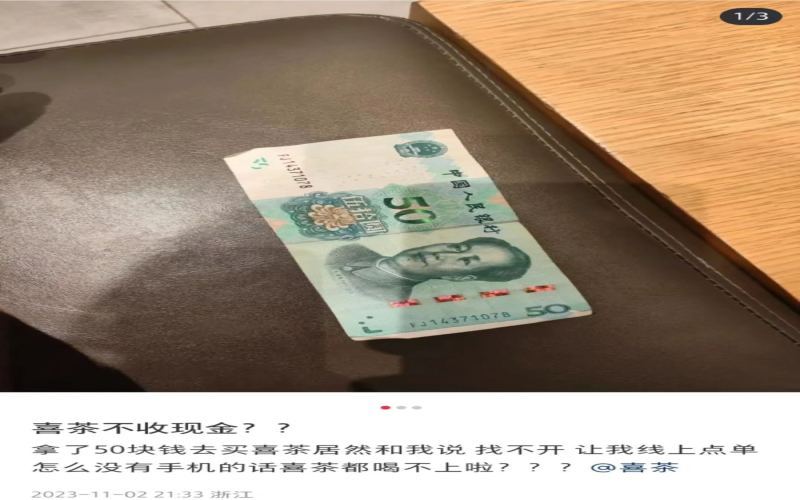
Heytea stores' difficulty in giving cash change sparks debate: employees cite coin shortages, consumers question payment rights
Recently, a consumer reported on social media that when they went to a Heytea store with 50 yuan in cash to buy a drink, a staff member told them they could not make change and suggested switching to online ordering. This experience quickly sparked widespread discussion, and many tea beverage industry practitioners chimed in, saying that insufficient small change reserves at stores are indeed a common phenomenon, especially during peak customer flow at mall locations, where staff often have no time to go out and exchange for small bills. However, some voices pointed out that the difficulty of making change should not be shifted onto customers, and merchants should ensure that all legitimate payment methods remain accessible. This is not the first time Heytea has been criticized over cash payment issues, and this incident has once again pushed the cash management problems of chain tea beverage brands into the spotlight. [more…]
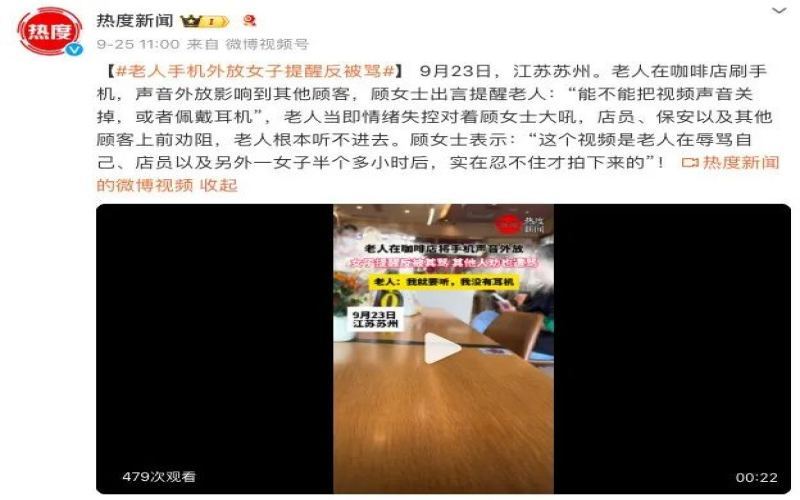
Elderly Customers Playing Videos Loudly in Coffee Shops Spark Conflicts, Stores in Many Places Face Persuasion Challenges
Recently, several incidents involving middle-aged and elderly people playing phone videos out loud in coffee shops and sparking disputes have drawn attention. From Suzhou, Jiangsu to Hangzhou, Zhejiang, similar scenes have played out repeatedly: elderly individuals turn the video volume up to the maximum, disturbing nearby customers who are working, studying, or chatting; when staff and other patrons step forward to remind them, they are subjected to prolonged verbal abuse and even come close to physical altercations. This phenomenon reflects the conflict between middle-aged and elderly short-video users and the public's need for quiet, and it also puts coffee shops in a dilemma when trying to maintain order. Front Street Coffee reminds us that savoring coffee requires a quiet and comfortable environment; playing audio out loud in a civilized manner not only affects others but also ruins the atmosphere a café should have. [more…]
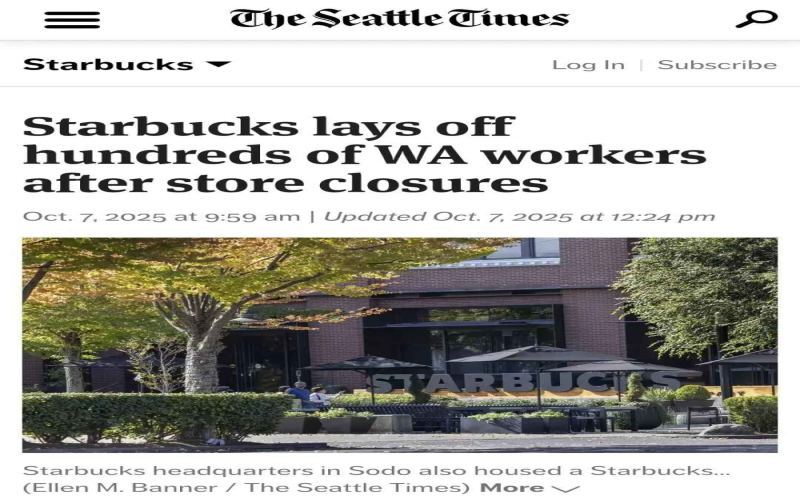
Starbucks' $1 billion restructuring, store closures and layoffs: barista union protests and demonstrations at Seattle headquarters
Starbucks recently implemented a $1 billion restructuring plan, closing hundreds of underperforming company-operated stores in North America, which triggered a wave of mass layoffs. In front of the global headquarters in Seattle's SoDo district, baristas and union members gathered to protest, holding up signs to express strong dissatisfaction with the company's decisions. Laid-off employees said they only learned of their job losses through prerecorded phone calls and social media, without being offered any opportunity to transfer. Union data shows that 59 unionized stores across the United States were permanently closed in this round of adjustments, with 369 people in Washington State facing permanent layoffs. Meanwhile, New York City regulators also pointed out that Starbucks is suspected of violating labor laws. This labor conflict is continuing to escalate, and the union stated that if their demands are not addressed, they do not rule out expanding actions or even going on strike. [more…]
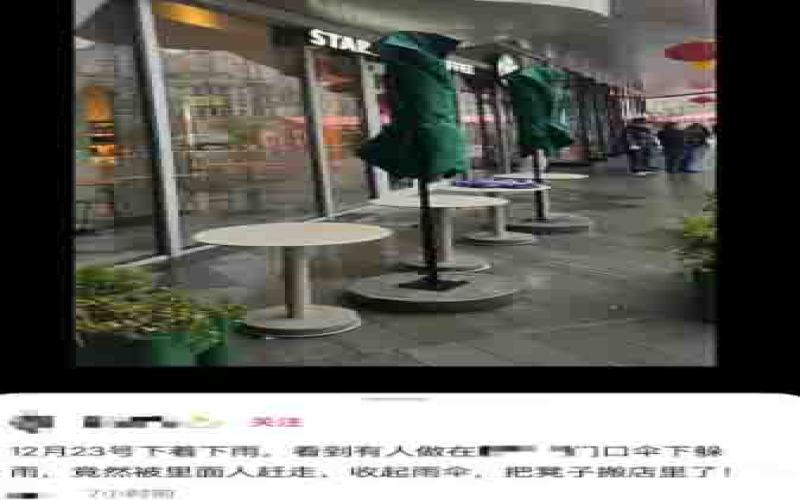
Hefei Starbucks store under fire for removing umbrellas and chairs on rainy day, store cites safety hazard of rain-soaked umbrellas
Recently, a Starbucks store in Hefei, Anhui Province, took down its outdoor parasols and removed the seats on a rainy day, prompting a customer to film a video and question whether the store was "shooing people away." The incident quickly sparked heated discussion online: some agreed with the store's safety-minded approach, while others felt that removing the chairs was lacking in human warmth. The Starbucks store manager explained to the shopping mall that the parasols posed a safety hazard after absorbing water, but did not explain why all the chairs had to be moved back inside. As coffee lovers, we might as well use this incident as a starting point to talk about the balance between outdoor space management and customer experience at coffee shops. Front Street Coffee has always paid attention to detail-oriented service in coffee consumption scenarios, and this article walks you through the entire incident and the views of various parties. [more…]
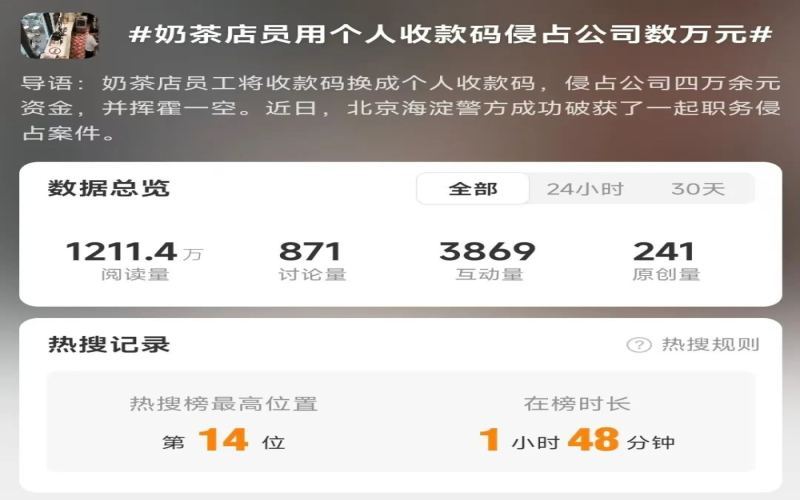
Milk tea shop employee secretly swaps payment QR code, embezzles 40,000 yuan and is criminally detained; corporate internal control loopholes draw attention
Recently, an incident in which a milk tea shop employee replaced the store's payment QR code with a personal one and misappropriated tens of thousands of yuan from the company trended on Weibo, sparking widespread discussion. According to a notice from the Haidian Public Security Bureau in Beijing, the employee had been collecting payments via a personal QR code since May of this year and concealed the act by cutting off the network and disabling surveillance. The estimated amount misappropriated reached over 40,000 yuan, and the person has now been criminally detained in accordance with the law. This case not only exposes loopholes in financial management at retail stores, but also once again reminds operators to strengthen internal oversight. As a platform for coffee enthusiasts, Front Street Coffee has always followed business developments and compliance issues in the beverage industry. This article reconstructs the course of events and analyzes the relevant legal points. [more…]
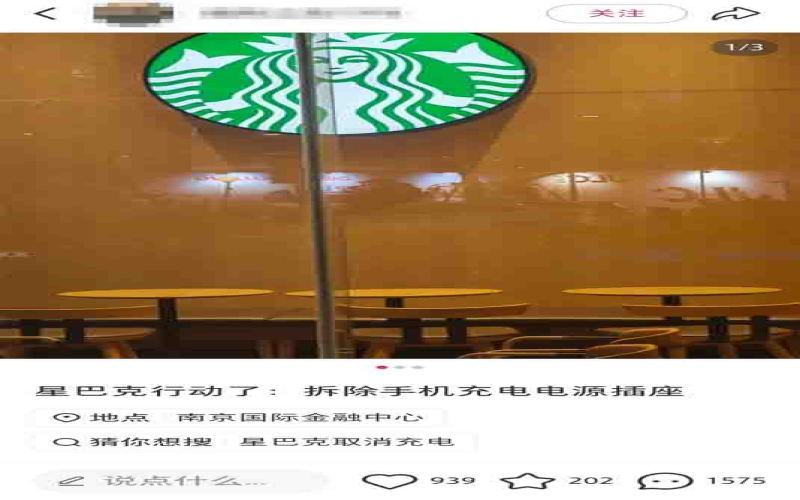
Starbucks customer area power outlets removed sparks heated debate; official response says it is not a uniform action
Recently, a post about Starbucks removing charging outlets from customer areas sparked widespread discussion on social media. Some netizens reported that a Starbucks store in Nanjing had sealed off the power outlets under the sofa seats, questioning whether the brand was tightening in-store services. Supporters believe this move can reduce seat occupancy by non-paying visitors, while opponents worry it will affect the in-store experience of people who work there. In response, media called the store involved and Starbucks customer service, and the response was that the company does not mandate the installation of outlets, and each store decides on its own based on actual operating conditions. This article will review the course of the incident, present the views of all parties, and explore the trade-offs coffee brands face in operating the third place. [more…]
A firsthand account of Shanghai coffee shops resuming dine-in service: Owners share heartwarming stories of perseverance and reunion
After more than three months of waiting, Shanghai's restaurant industry has finally seen the return of dine-in service. Starting June 29, streets and towns within their jurisdictions that have no medium-risk areas and no community transmission in the past week have been reopening dine-in service in an orderly manner. As soon as the news broke, phones at major coffee shops would not stop ringing, and owners rushed to share moments from this extraordinary period: some customers arrived to wait before the staff did, some owners drank through an entire batch of limited-edition beans by themselves, some worked around the clock living at their shops, and others are still waiting for approval. This article documents the real experiences of Shanghai coffee shop owners, as well as the procedures and current situation behind the resumption of dine-in service, while also keeping its focus on and recommendations for specialty coffee beans. [more…]

Luckin Coffee's new full scan-to-close rule sparks employee discontent, with cumbersome operations and frequent system failures
At the end of July, Luckin Coffee introduced a new closing procedure called "full scan" within its store system, requiring employees to scan and log every item with an expiration date label in the store one by one fifteen minutes before closing, and repeat the process again on the next morning shift. This move sparked a flood of complaints from frontline employees on social media—already tight staffing was further squeezed, unpaid overtime hours continued to lengthen, and the new system frequently suffered recognition failures and abnormal error reports during scanning, turning this digital initiative aimed at managing shelf-life control into what employees see as a burdensome "white elephant" feature that only adds extra work. This article is compiled from Coffee Workshop and takes you through the specific operational process and the real voices of employees behind this controversy. [more…]

Xiaomi's Cross-Industry New Attempt: The World's First Xiaomi Coffee Shop Lands in Milan, Blending Smart Living with Italian Coffee Culture
When a tech brand meets coffee culture, what kind of sparks will fly? Xiaomi has opened its first global Xiaomi coffee shop in Milan, Italy. This space, named Xiaomi Cafe, not only offers coffee, light meals, and aperitifs, but also integrates Xiaomi's smart ecosystem into real home scenarios, allowing consumers to experience products in a relaxed atmosphere. From phones to cars, and now to coffee, Xiaomi's cross-industry strides are growing ever bolder. Is this café a new window for brand display, or a concrete expression of an intelligent lifestyle? Let's find out. [more…]